The Importance of HTML Tag Hierarchy
HTML heading tags (h1, h2, h3, h4 and h5) are essential for organising page content and improving your website's SEO and accessibility. When used correctly, they help search engines understand the page structure and make it easier for users to read and navigate.
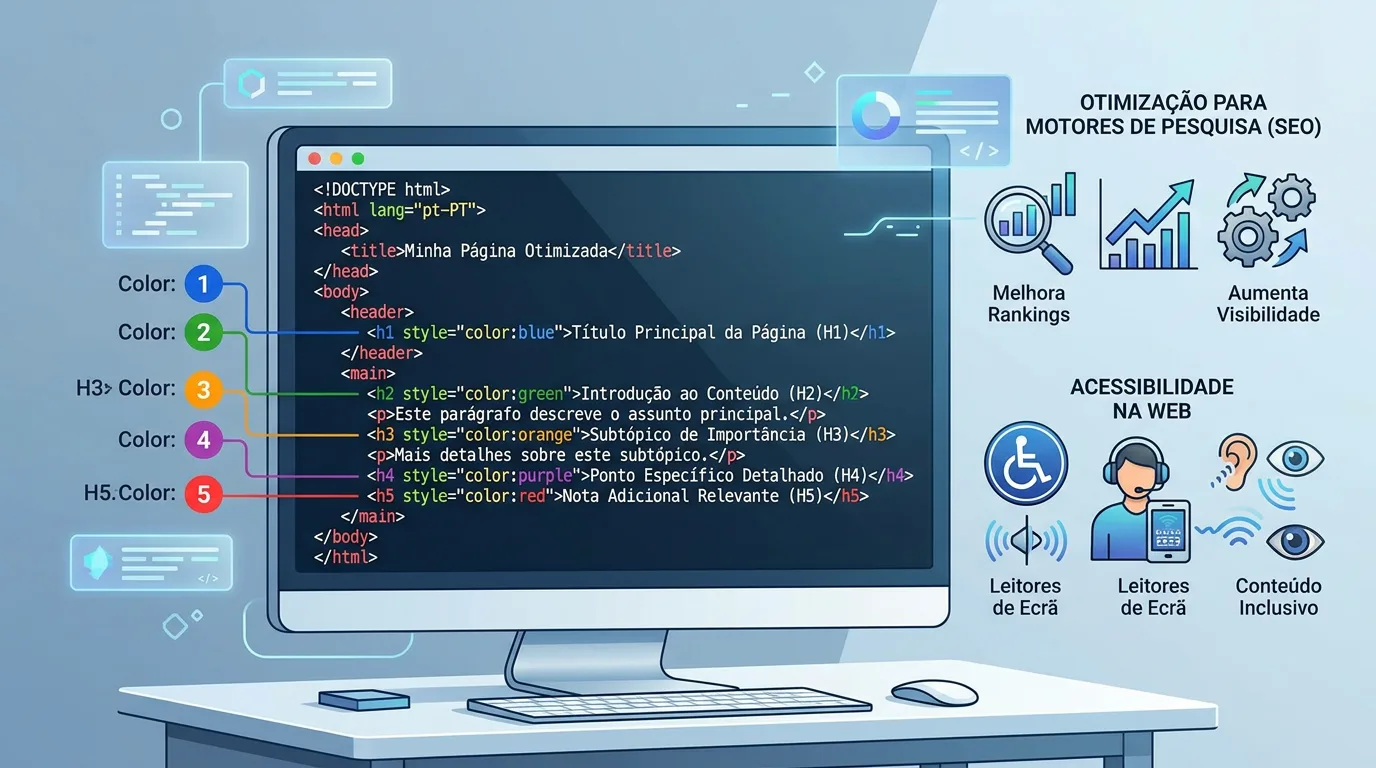
HTML heading tags (h1, h2, h3, h4 and h5) are essential for organising page content and improving your website's SEO and accessibility. When used correctly, they help search engines understand the page structure and make it easier for users to read and navigate.
What are H1, H2, H3, H4 and H5 tags
The h1 tag is the main title of the page and should be unique, representing the central theme of the content.
H2 tags act as subheadings that divide the content into sections related to the h1.
H3 tags expand on each h2 section, creating more detailed subsections.
H4 tags are used to further organise content within areas marked with h3, allowing for greater granularity.
H5 tags represent even more specific levels in the hierarchy, used only when content needs to be broken down into highly detailed parts.
Hierarchy and best practices for SEO
A clear hierarchy from h1 to h5 is essential for search engines to correctly interpret the relevance of each part of your content. You should always start with a single h1, followed by h2, h3 and so on, without skipping levels (for example, avoid jumping from h1 directly to h4). This tree-like structure makes content more logical, improves readability and helps users quickly find the information they are looking for.
It is also recommended to include relevant keywords in headings and subheadings, where it makes sense for the user, as search engines use these tags to understand the topic of each section. A well-structured heading hierarchy contributes to better on-page SEO performance and can positively influence a page's ranking in search results.
Accessibility and user experience
Heading tags also play an important role in accessibility, particularly for users who rely on screen readers. These tools use h1, h2, h3, h4 and h5 to navigate through content, allowing users to jump between sections and quickly understand the organisation of the page. By maintaining a consistent and descriptive hierarchy, you improve the browsing experience for all users, including those with visual impairments.
Using h1, h2, h3, h4 and h5 tags correctly — following the hierarchy and applying them to the right text elements — helps both search engines and website visitors better understand your content. This translates into stronger SEO results, greater usability and a more enjoyable reading experience for every user.

The ID Digital team, a web design and digital marketing agency in Aveiro, with over 10 years of experience in digital projects.