
NAS servers for businesses: centralised, secure storage with QNAP and Synology equipment, accessible from any device.
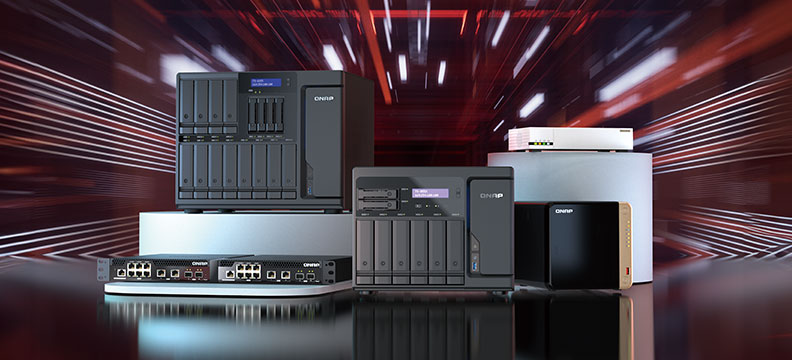
A NAS server (Network Attached Storage) is a network-connected storage device that lets you store, manage and share all your company's files from a single point. In one unit, you can consolidate working documents, backups, images and other data from multiple computers and mobile devices.
By deploying NAS servers in your business, you create an organised space accessible from PCs, laptops, smartphones and tablets — whether in the office or remotely.
NAS servers are an ideal solution for SMEs that need a centralised, reliable file system without investing in complex traditional server infrastructure.
We work with leading brands such as QNAP and Synology, selected according to each business's specific needs. To get the most out of your NAS, it's important to start with a well-structured IT network.
A modern NAS server offers most of the functionality of a classic server:
All through a straightforward interface designed for users with no technical background.
The purchase price of a NAS is a fraction of the cost of a dedicated server. Add to that further savings:
A NAS can be managed locally or remotely through an intuitive web interface. If you prefer, our team handles all configuration, monitoring and maintenance on your behalf.
Our NAS servers typically use RAID1 (disk mirroring). In practice, this means:
In addition to access over the internal network, the NAS enables secure remote access from any computer or mobile device. This makes it a great fit for remote teams or employees working on the go.
It's possible to set up automatic backups of all company computers to the NAS. A small application is installed on each PC, laptop or mobile device, compatible with Windows, macOS (
In most cases, yes! The Portuguese business landscape is made up of SMEs. In fact, they account for 99.3% according to eco.sapo.pt.
Yes.
Yes, all the NAS servers we install run on RAID 1 or higher, which means that if one disk fails your data is safeguarded on the other.